
Wire and insulation in coil winding: handling the other half of the coil
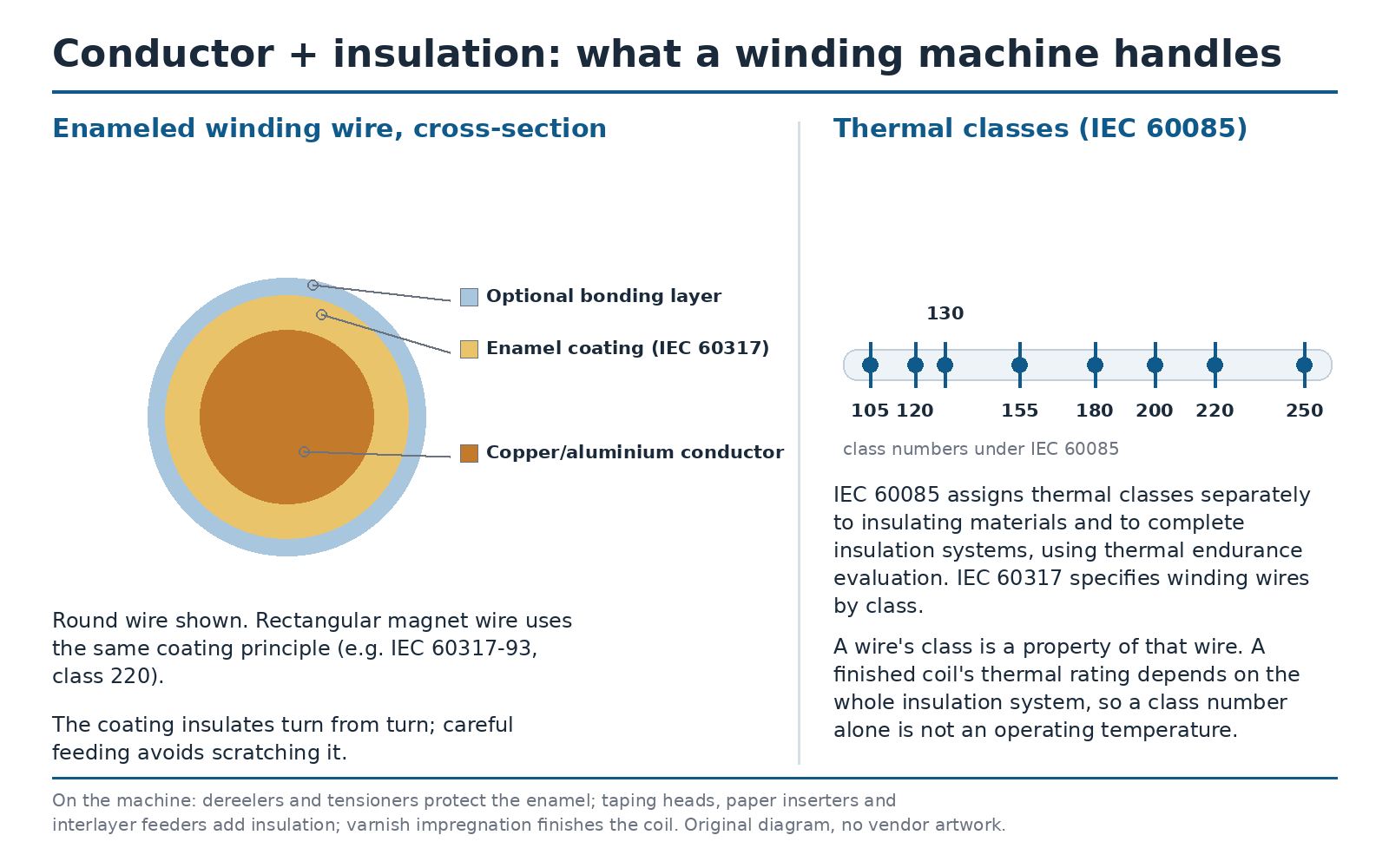
A coil looks like a single thing: neatly wound copper. In practice it combines two things that have to work together. The conductor carries the current, and the insulation keeps that current where it belongs, turn to turn, layer to layer and coil to core. Winding machines handle both. This article looks at how wire and insulation are handled on the machine side, using examples from makers' own product pages.
The conductor arrives already insulated
Most coils start from magnet wire: a copper or aluminium conductor with a thin polymer enamel. The IEC 60317 series specifies these winding wires, from general requirements for enamelled round copper wire (part 0-1) to individual types such as class 220 enamelled rectangular copper wire (part 93). The class number relates to thermal endurance.
IEC 60085 assigns thermal classes separately to insulating materials and to complete insulation systems, and sets the criteria for evaluating the thermal endurance of each. Two things follow. A wire's class is a property of that wire product, and a finished coil's thermal rating depends on its whole insulation system. A class number by itself is not an allowable operating temperature for a design.
The enamel is thin and can be scratched, so a winding line's first insulation job is to avoid damaging the insulation the wire already carries.
Feeding and tensioning
Between the supply spool and the coil, wire passes through dereelers and tensioners. Broomfield (USA) lists constant tension dereelers for round or rectangular conductors. Its DT series stands offer air-actuated tension control that, according to the maker, prevents spool over-spin when winding stops, with tension set from the operator control station.
Some shops also reshape the conductor in line. Broomfield's WF-50 is a wire flattener for copper and aluminium wire, offered to run in line with a winding machine. Flattened or rectangular conductors need their own tension and guide setups.
Insulation added during winding
For many coil types the machine applies further insulation as it winds. Three examples from makers' pages:
Toroidal coils. Jovil Universal's JV225 is a dedicated tape and shielding machine with interchangeable magazines for standard tape widths. The listed materials include Mylar, polyester, paper, varnished silk, fiberglass and cloth, and also copper shielding. Copper tape is conductive shielding, not insulation, so it is a different job from the insulating tapes in that list.
Foil windings. In low-voltage transformer coils the conductor is often a foil, with insulation fed between layers. Trishul Winding Solutions (India) lists a programmable foil winding machine for low-voltage coils with foil conductors, inter-layer insulation and end-fill support. Calotron (Germany) describes foil and band winding machines for transformer and choke construction.
Stator slots. Motor stators are insulated slot by slot. Odawara Automation (USA) says that in its hairpin lines insulation paper is formed to a U, S or B shape and inserted into each slot. It also lists an insulator machine that forms and cuts insulation material to length, and a slot cell insulating machine on its armature lines. Aumann (Germany) lists paper insulation feeding and inserting on a stator line.
After winding: impregnation
Impregnating varnishes and resins are used to consolidate wound coils. ELANTAS, an insulation materials maker and not a machine builder, lists impregnating materials from solvent-based and water-based varnishes to unsaturated polyester and epoxy resins. It says they suit methods including dip, trickle and vacuum pressure impregnation.
Machine builders and material makers are different trades
The winding machine companies above build machines that handle insulation. They do not make the insulation itself. Enamelled wire comes from magnet wire producers working to IEC 60317. Tapes, slot papers and films come from insulation material makers. Varnishes and resins come from chemical suppliers such as ELANTAS.
Product details are as described on each company's own pages, checked on 25 November 2026. Standards links go to the IEC webstore listings. This is not a product endorsement or ranking. The header diagram was created for Coil Winding News from the standards concepts described above. It contains no vendor artwork, and thermal class numbers in it are not operating temperatures.